What does a negative spike mean?
It means several critical reviews arrived in a short window. That window can be a real operational failure, a coordinated policy-violating attack, or a mix.
Unusual volumes or patterns of contributions can indicate rating manipulation. Genuine clusters still need operational replies. Do not treat every spike as fake, and do not treat every spike as “just customers.” Source: Prohibited and restricted content. How to classify and report a single suspicious review is in what a business can do about fake or malicious Google reviews. This page is the incident workflow when several arrive together.
How do you tell genuine operations from an attack?
Match each review to appointments, tickets, deliveries or a known outage. Look for identical wording and accounts with no plausible visit.
A weekend of failed bookings can produce real one-star posts from people you actually served. A burst of generic insults from accounts with no local detail, all within an hour, is a different pattern. Keep that matching private. Do not publish booking records in a review reply. If the Google average is still high but another site is exploding, map surfaces on why a Google rating can look strong while reputation elsewhere looks poor.
Ops
Did something actually go wrong? A weekend outage or a product fault can produce a real cluster.Fake
Does the text look coordinated? Fake engagement and unusual volumes are policy issues. Report those items.Reply
Answer genuine complaints Google’s reply tips: professional, private follow-up, no personal information.Yes
Report violating items separately One appeal path if Google finds no violation. Do not accuse customers in public.Next
Check restriction mail Policy violations by the business can restrict reviews. Use the official appeal.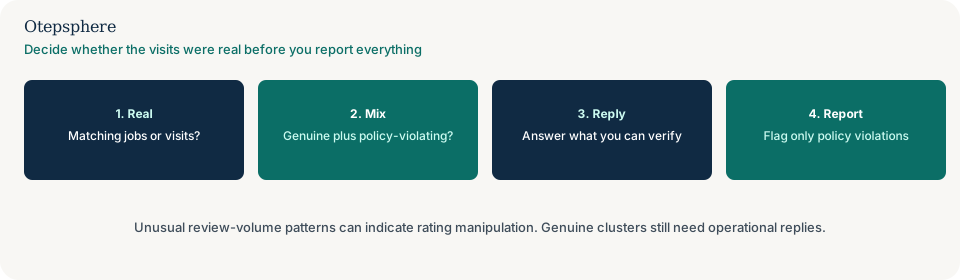
What should you report?
Report content that appears to violate Maps policy. Leave genuine criticism in place.
Google’s reporting help is for policy-violating reviews, not for ratings you dislike. Flag item by item. Track status in Maps if the feature is available. Source: Report a review. Do not accuse reviewers of fraud in public. Google decides. If inherited fake positives from a vendor are the issue instead, use what to do if a previous SEO agency added fake positive reviews.
How should you reply?
Reply to genuine complaints factually, invite a private follow-up using contact details already on the profile, and do not include personal information or promotional offers.
Google’s reply guidance: professional, not promotional, personalised where useful. A mix of public ratings can feel more trustworthy than a perfect score. Source: Tips to get more reviews. If a reply never appears, that is moderation: why a Google review reply is not showing.
What if Google restricts reviews?
Read the restriction notice and use the official appeal. Do not create a second Business Profile to collect a new rating.
Google can restrict new reviews or unpublish existing ones when it finds policy violations. Source: Business Profile restrictions for policy violations. If reviews then vanish, follow why Google reviews disappear or stop showing. Competitor listing spam is a different Maps problem: what to do about competitor spam on Google Maps.
Spike decision table
| What you see | What it usually means | Decision | What not to assume |
|---|---|---|---|
| Reviews match real visits or a known failure | Operational cluster | Fix the operation; reply factually; do not report genuine criticism | That every negative review is an attack |
| Identical scripts, no visit detail, tight timing | Possible fake engagement | Document and report those items; watch for a restriction | That buying five-stars will cancel them |
| Some real, some fabricated | A mix | Split the list. Reply to the real. Report the violating | That one public accusation covers the whole wave |
| Restriction email after the spike | Google may have found a policy issue | Official appeal only; do not open a new listing | That a consultant can guarantee removal or reinstatement |
What should I not do?
Action checklist
- List each new review: date, wording, whether it matches a real visit or known incident.
- Save private screenshots and the Maps URL. Do not share personal data in replies.
- Reply to genuine complaints. Report only policy-violating content, item by item.
- Fix the operational cause when the criticism is true.
- Check Google email for a restriction. Appeal only through the official process.
- Continue ethical requests for future genuine reviews. Do not run a retaliatory burst.
When professional help makes sense
Help is useful when you cannot separate a genuine failure from coordinated fake engagement, or when a restriction notice arrives during the same week. It cannot guarantee that Google will remove reviews, and it will not replace them with paid ratings.
Sources and further reading
- Maps User Generated Content Policy: Prohibited and restricted content
- Google Business Profile Help: Report a review
- Google Business Profile Help: Tips to get more reviews
- Google Business Profile Help: Business Profile restrictions for policy violations
A sudden wave of negative Google reviews?
Otepsphere can help split genuine operational complaints from policy-violating content and set a response sequence — without promising removals or a recovered average.
Contact OtepspherePublished by Otepsphere
Published by Otepsphere, founded by Joseph Enmanuel. Learn about Otepsphere and its approach to local SEO.