Does changing a business name affect Local SEO?
Changing a business name can affect how customers and search systems recognise the business, especially if the new name is used inconsistently or if Google treats the change as a new business. It does not have a single, guaranteed ranking outcome.
Google’s local ranking help names relevance, distance and prominence, and says complete and accurate information makes a business more likely to show. A name that no longer matches the website, signage or citations makes the entity harder to recognise. That is a consistency and identity issue, not a secret ranking lever. Source: Tips to improve your local ranking on Google.
Edit help also says that if you change the business name after it is verified, you might need to verify again. Source: Edit your Business Profile.
Should I create a new Google Business Profile?
Create a new Business Profile only when Google treats the name change as a new business. If the change meets Google’s rebrand criteria, edit the existing profile instead.
Google’s current rebranding section says a profile may be eligible for rebranding — an eligible name change without creating a new Business Profile — if you make a minor name change in which the proper nouns and services described in the business name remain unchanged and the business category remains unchanged. Multiple locations that change the business name may also be eligible. If the change does not meet those criteria, Google says it is a new business: mark the existing profile as closed and create a new Business Profile. Source: Guidelines for representing your business on Google.
Choosing between a current legal entity name and a current trading name — without a completed public rename — is a different decision: whether the Business Profile should use the legal name or the trading name. In practice, a spelling tidy or a short legal-form change that still matches signage is closer to a rebrand. A complete rename into a different service (“Riverside Plumbing” becoming “Summit Solar”) is closer to a new business on Google’s wording. If you are unsure, compare the old and new names against that paragraph before you close anything. Contact Google support if the edit is rejected. Do not run two live profiles for the old and new names of the same location. That is a duplicate risk.
Eligible rebrand
Edit the existing Business Profile name Google describes this as a minor name change where proper nouns, services and category stay the same.New business
Mark the old profile closed and create a new one That is Google’s current rule when the change does not meet the rebrand criteria.Website
Update name, logo, About, Contact and schema Redirect an old domain if the URL also changes.Listings
Update important external references Do not leave old and new names as two live profiles for the same location.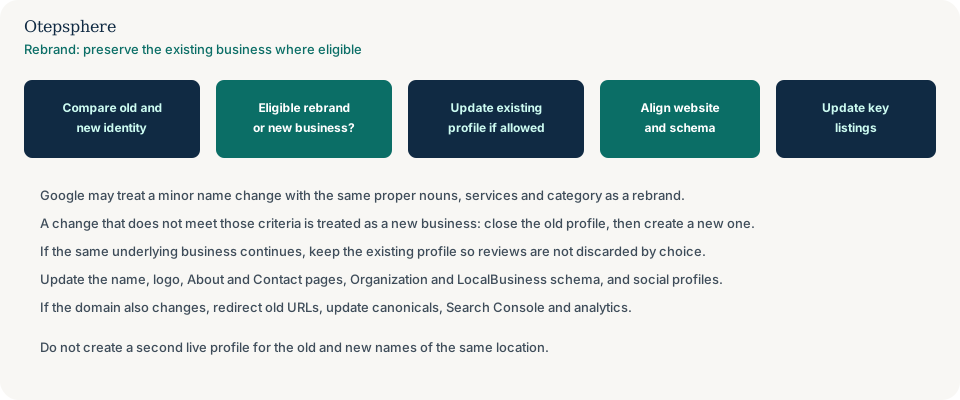
What should be updated on the website?
Update every public surface that still presents the old identity as current: name, logo, titles where they still describe the old brand, About, Contact, Organization and LocalBusiness schema, social profile links, and any legal or registration details you already publish.
- Business name in the header, footer and contact block.
- Logo and any image alt text that still names the old brand as the current company.
- Title and meta descriptions that still use the retired name as the primary identity.
- About page: state the new name and, when useful, that the business formerly traded as the old name.
- Contact page: name, address, phone and the same facts as the Business Profile.
- Organization and LocalBusiness schema: name, url, logo and address must match visible content.
- Social profile names and the links you list on the site.
- Public legal information you already show, such as a trading name, if it has changed.
Entity alignment across these fields is the subject of entity SEO for local businesses. On-page title work belongs in local on-page SEO when the pages themselves are thin or inconsistent. After the files change, Search can still show an old favicon, an old site name or an old organisation logo until Google recrawls those features. They are three different surfaces.
What should happen to the old domain?
If the domain also changes, redirect the old URLs to their new equivalents, keep canonicals on the new host, update internal links, and move Search Console and analytics to the new property.
That is ordinary site-move hygiene, not a second Local SEO product. Map old service and location URLs one to one. Do not redirect the entire old site to the homepage unless those URLs had no useful equivalent. Add the new domain in Search Console and keep the old property long enough to confirm the redirects. Point the Business Profile website field at the new homepage or location page once that page is live.
If the domain stays the same and only the visible name changes, skip the redirect project. Update content and schema on the existing host.
What citations should be updated?
Update the same high-impact listings you would fix after a move: Google first, then platforms customers already use, then relevant industry or government sources. Do not blast hundreds of directories with the new name.
Old-name listings that still describe the open shop should be edited, not cloned. If a directory cannot change the name, document it and stop creating extra records. Citation priority is explained in local citation management and inconsistent business information online. Links that still point at the old name or host are how to recover local backlinks after a rebrand or domain change. If an AI answer still introduces the former name, that is why AI search still uses the old business name after a rebrand.
What about reviews?
Reviews stay with the Business Profile you keep. If Google’s rebrand path applies, edit the existing listing so the review history is not discarded by opening a replacement profile.
If Google requires a new profile because the change is a new business, the old listing is marked closed and the new listing starts without those reviews. That is a consequence of Google’s current rule, not a setting an agency can override. Google’s ownership help also says transferring primary ownership keeps business information such as reviews on the same profile when the people change. If the business is being sold rather than renamed, follow what happens to Google Business Profile and Local SEO when a business is sold. Source: Transfer primary ownership of a Business Profile. You still cannot edit historic customer sentences that mention the old name. Reply with current facts instead: what to do when reviews mention an old business name or address.
How should old brand mentions be handled?
Leave accurate historical mentions in place and make the current name obvious on pages you control. Do not hunt the web to erase every old reference.
News articles, supplier pages and old PDFs will keep the former name. On your own site, one clear “formerly” sentence on the About page is enough for customers. Ask high-impact partners to update their listing when they still present the old name as current. Do not create a second Business Profile solely to park the old name.
What not to do:
- Do not keyword-stuff the new profile name with both brands and a city.
- Do not keep two live profiles for the same shop, one per name.
- Do not close a still-eligible profile just to “reset” reviews.
- Do not leave the old domain live without redirects if the site has moved.
Rebrand Local SEO Checklist
- Compare old and new names against Google’s rebrand paragraph: proper nouns, services in the name, category.
- If eligible, edit the existing Business Profile name. If not, close the old profile and create a new one.
- Use the real-world name on signage, invoices and the website before or as you edit the profile.
- Expect possible re-verification after a name change.
- Update logo, About, Contact, titles where needed, and Organization/LocalBusiness schema.
- If the domain changes, redirect old URLs, update canonicals, Search Console and analytics.
- Point the profile website field at the current site.
- Update important listings. Do not bulk-submit the new name.
- Explain the former name once on the About page. Do not run a second live listing for it.
- Watch Maps and the location page after the change. Do not treat one quiet week as failure.
When professional Local SEO assistance makes sense
Help is useful when a rename coincides with a domain move, several locations, or uncertainty about whether Google will treat the change as a new business. It cannot keep every old branded search and every review if Google requires a new profile.
Official Google sources
- Guidelines for representing your business on Google
- Edit your Business Profile
- Tips to improve your local ranking on Google
- Transfer primary ownership of a Business Profile
Planning a business rebrand?
Otepsphere can review the website, Business Profile and important local signals before and after the change to reduce avoidable confusion for customers and search platforms. Google decides whether a name edit is accepted as a rebrand or treated as a new business.
Contact OtepspherePublished by Otepsphere
Published by Otepsphere, founded by Joseph Enmanuel. Learn about Otepsphere and its approach to local SEO.